 Weather Slate
Start with temperature and feels-like
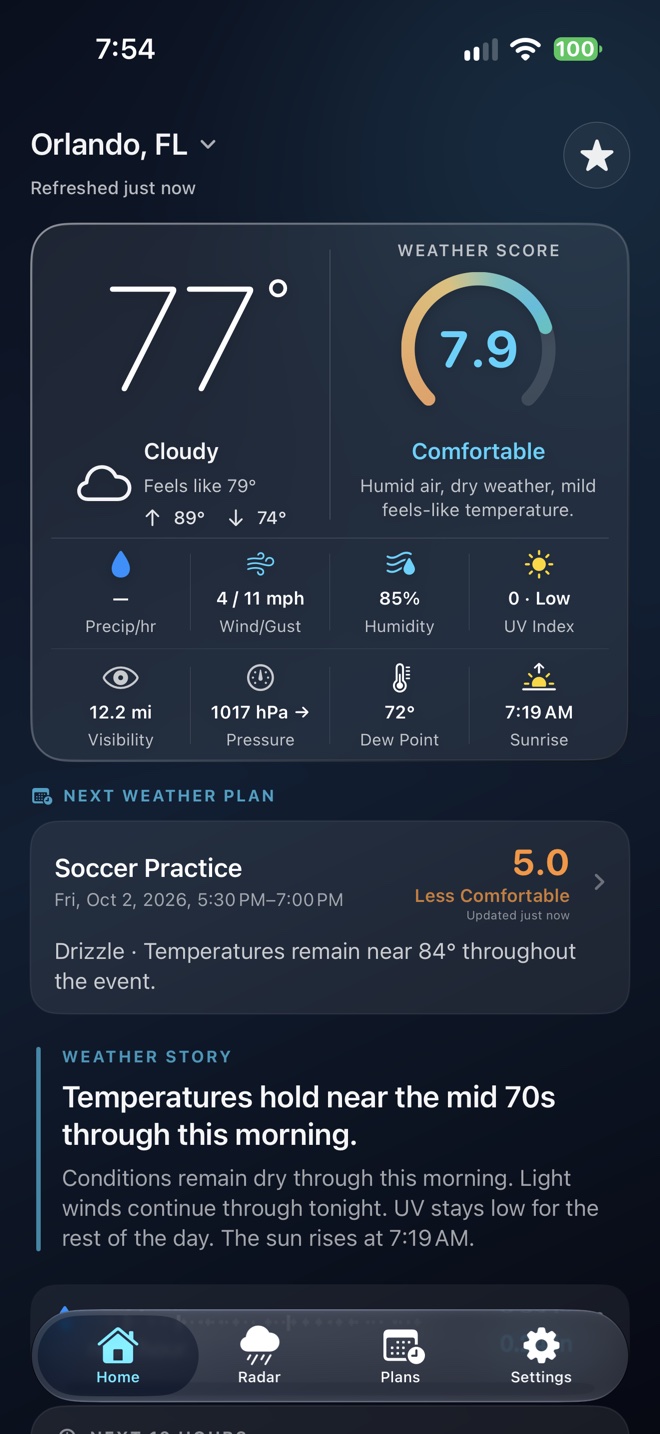
Air temperature is the baseline. Feels-like information adds context about how conditions may affect comfort. Heat index, for example, combines temperature and humidity; wind chill describes the effect of wind in cold conditions. They apply in different circumstances and are not personal exposure limits. NWS heat tools and its wind chill guide explain the distinction.
The daily high and low describe a wider period. Neither tells you the temperature at the moment your practice starts or your evening walk ends. For that, move to the hourly view.
Read wind and moisture together
- Wind and gusts
- The general wind speed describes the broader flow. Gusts identify brief stronger bursts that can matter for umbrellas, loose items, sound equipment, or a camera on a tripod.
- Humidity
- Relative humidity depends on temperature. Use it with temperature and feels-like information rather than comparing percentages alone between a cool morning and a warm afternoon.
- Precipitation
- A chance of rain and an amount of rain answer different questions. Read the unit and time period: a percentage describes likelihood; an amount or rate describes water quantity.
Do not overlook light and exposure
Sunrise and sunset help you plan around daylight, but terrain, buildings, and clouds affect the light where you stand. Allow time to return from an outing before visibility becomes a problem.
The UV Index concerns ultraviolet exposure, not warmth. A comfortable temperature does not establish low UV. Use the EPA’s UV guidance to interpret the index and choose appropriate protection.
Check the place and the time
Weather Slate brings these details together with the selected location and an update indication. First confirm that you are looking at the intended place. A saved destination can be different from your current location.
A recent weather reading still represents information for an area, not a measurement from your exact doorstep. If the app and your surroundings disagree, check the update time, connection, and official local information. Missing information is not the same as a zero value.