 Weather Slate
What the colors can tell you
Weather radar detects returned energy from targets in the atmosphere. Precipitation products turn those observations into a map that helps you locate and compare areas of precipitation. Color meaning depends on the product and its legend; a bright patch alone is not a complete storm diagnosis.
Do not infer lightning, a tornado, or conditions on the road from precipitation colors alone. For hazards, read the official alert and its affected area. A radar map and a warning are different kinds of information.
Watch the sequence, not just one frame
Playback can show whether a band is moving toward a place, passing alongside it, or changing shape. Start by finding your location and nearby landmarks, then watch several frames with their timestamps.
Historical movement is not a guaranteed future track. A cell can intensify, fade, or develop in a new location. Distinguish the time of the displayed frame from the time you opened the app; an older frame can look perfectly sharp.
Weather Slate’s U.S. radar approach
Weather Slate is developing its own U.S.-focused radar delivery pipeline around NOAA/MRMS data. MRMS combines information from multiple radars and other observations to create weather products. That data foundation does not mean Weather Slate offers every MRMS product.
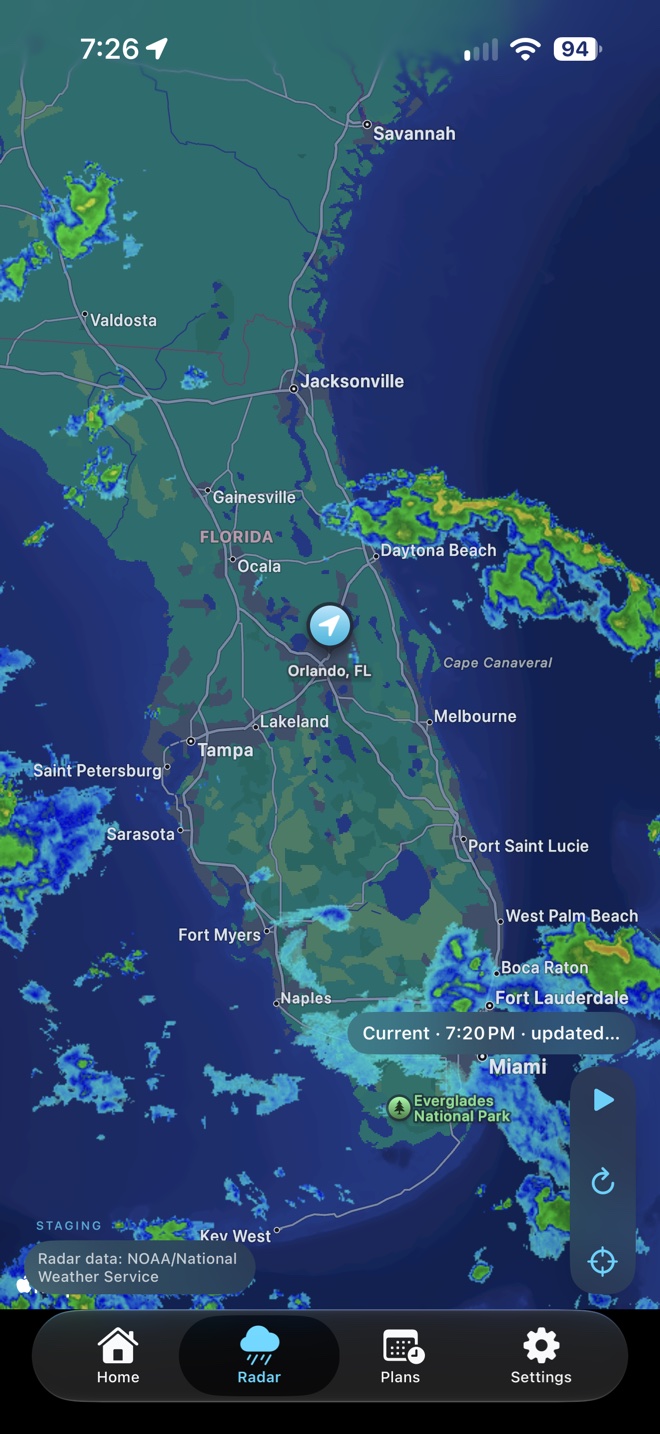
The design places precipitation beneath useful map context so city and place labels remain readable. Timeline and playback work aim to make movement easier to understand. The genuine pre-release screenshot shows development work, not a claim of flawless coverage or superior accuracy.
Why radar and the view outside may disagree
Radar measures the atmosphere above the surface. Detected precipitation may evaporate before reaching the ground; NOAA explains this limitation. Coverage, terrain, processing, and data delays can also affect the view.
If a map is blank, frozen, or stale, treat that as missing information. It does not establish that the area is clear. Compare the forecast and current conditions, and use official local weather sources when the decision matters.
A practical radar reading order
- Confirm the place and scale of the map.
- Check the timestamp and whether you are viewing the latest frame.
- Play the sequence to understand recent movement.
- Compare it with near-term precipitation and official warnings.
Weather Slate radar remains in development. Coverage, playback details, and any future extended history may change before release.